


Applications for the September 2026 Qualifier are open. Apply by November 21, 2025. Apply now
Diploma Level Course

Machine Learning Foundations

This course lays the groundwork for the upcoming ML courses by covering various fundamentals that do not necessarily fall under Machine Learning but are quite necessary for a comprehensive understanding of Machine Learning.

Code BSCS2004
Credits 4 Credits
Type Data Science
Prerequisites None
Core Competencies

What You'll Learn

View Course Videos
  • Recognising if a particular problem can be viewed as a Machine Learning problem.

  • Breaking down standard Machine Learning problems into more fundamental problems using tools from Calculus, Linear Algebra, Probability and Optimisation.

  • Recognising relationships between equation solving, projection onto a subspace, and the supervised learning problem of linear least squares regression.

  • Visualising eigenvalue/eigenvectors as a property of a matrix, and recognising its potential in practical unsupervised learning problems like dimensionality reduction and image compression.

  • Using, identifying failure modes, programming and debugging simple gradient descent methods for solving unconstrained optimisation problems.

  • Recognising the value of simple models like Gaussian mixture models for data, constructing algorithms for learning the parameters of such models, and interpreting these parameters.

12-Week Roadmap

Course Structure & Syllabus

For details of standard term assessment timelines and exam structures, visit our Academics page.

WEEK 1
Introduction to machine learning
WEEK 2
Calculus
WEEK 3
Linear Algebra - Least Squares Regression
WEEK 4
Linear Algebra - Eigenvalues and eigenvectors
Faculty & Experts

About the Instructors

Harish Guruprasad Ramaswamy

Harish Guruprasad Ramaswamy

Assistant Professor , Department of Computer Sciences & Engineering , IIT Madras

I am currently an assistant professor at the computer science and engineering (CSE) department of IIT Madras. My primary areas of interest are in machine learning, statistical learning theory and optimisation. I was previously a research scientist at IBM research labs and a post-doc at University of Michigan. I completed my PhD at the Computer Science and Automation (CSA) department of the Indian Institute of Science (IISc), Bangalore advised by Prof. Shivani Agarwal. I have been fortunate to work with Profs. Ambuj Tewari and Clayton Scott during my PhD and postdoc. Earlier, I finished my M.E. under the supervision of Prof. Chiranjib Bhattacharyya.
Arun Rajkumar

Arun Rajkumar

Assistant Professor , Department of Computer Sciences & Engineering , IIT Madras

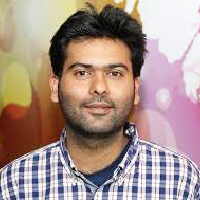
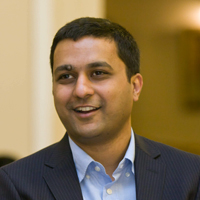
I am currently an Assistant Professor at the Computer Science and Engineering department of IIT Madras. Prior to joining IIT Madras, I was a research scientist at the Xerox Research Center (now Conduent Labs), Bangalore for three years. I earned my Ph.D from the Indian Institute of Science where I worked on 'Ranking from Pairwise Comparisons'. My research interests are in the areas of Machine learning, statistical learning theory with applications to education and healthcare.

Prashanth LA

Prashanth LA

Assistant Professor , Department of Computer Sciences & Engineering , IIT Madras

Prashanth L.A. is an Assistant Professor in the Department of Computer Science and Engineering at Indian Institute of Technology Madras. Prior to this, he was a postdoctoral researcher at the Institute for Systems Research, University of Maryland - College Park from 2015 to 2017 and at INRIA Lille - Team SequeL from 2012 to 2014. From 2002 to 2009, he was with Texas Instruments (India) Pvt Ltd, Bangalore, India.

He received his Masters and Ph.D degrees in Computer Science and Automation from Indian Institute of Science, in 2008 and 2013, respectively. He was awarded the third prize for his Ph.D. dissertation, by the IEEE Intelligent Transportation Systems Society (ITSS). He is the coauthor of a book entitled `Stochastic Recursive Algorithms for Optimization: Simultaneous Perturbation Methods', published by Springer in 2013. His research interests are in reinforcement learning, simulation optimization and multi-armed bandits, with applications in transportation systems, wireless networks and recommendation systems.